First-Time Japan Travel Guide: Tips, Costs and How to Book a Guided Tour
Japan doesn’t just impress — it overwhelms in the best possible way. The moment you step off the plane, you’re met with a sensory world unlike anywhere else: cherry blossoms drifting over ancient temple rooftops, the electric hum of Tokyo’s neon-lit streets, the meditative stillness of a Kyoto bamboo grove, the umami richness of a bowl of ramen eaten standing up at a train station counter. Japan is a cultural contrast at its most magnificent.
And yet, for many first-time visitors, Japan feels intimidating on paper. Different alphabet. Complex train network. Customs and etiquette that differ from home. We hear it often: “I want to go, but I don’t even know where to start.”
Here’s the truth: Japan is one of the most traveller-friendly countries on earth. It has world-class infrastructure, remarkably safe streets, and locals who go out of their way to help a confused visitor. The complexity is largely a myth — especially when you have the right Japan travel tips for beginners to guide you, or a seasoned tour operator handling the details.
This guide covers everything you need to plan your first trip, from the best times to visit and a real budget breakdown, to understanding why Japan guided tours for first-time visitors are increasingly the smartest way to experience the country without the stress: the best times to visit, a real budget breakdown, must-see destinations, practical tips, and an honest comparison of DIY travel versus a guided tour. Whether you’re planning to go solo or looking for Japan guided tour packages that take care of everything, you’ll leave this page knowing exactly what to do next.
Why Japan Is the Perfect First International Adventure
Few countries reward curiosity the way Japan does. In a single two-week trip, you can stand in a 1,400-year-old Buddhist temple in the morning, eat a Michelin-starred meal in the afternoon, and watch robot waiters serve cocktails in the evening. The range is staggering — and it’s all delivered with clockwork efficiency and exceptional safety.
Japan consistently ranks among the world’s safest countries for travellers, including solo women. Trains run on time (sometimes to the second). Convenience stores sell genuinely good food around the clock. Locals are courteous and helpful even through a language barrier.
The “Japan is complicated” myth tends to come from people who haven’t been. Yes, the train network can look like a circuit board on your first glance. Yes, some restaurants don’t have English menus. But these are navigable challenges — not barriers. And if you’d rather spend your energy experiencing Japan than puzzling over logistics, that’s exactly where a guided tour earns its value.
But getting the most out of Japan — understanding why a temple was built here, knowing the one neighbourhood in Kyoto that most tourists miss, finding the ramen shop hidden at the end of an unmarked alley — that takes planning, or the right guide.
When to Go — Choosing the Best Time to Visit Japan First Time
Timing matters enormously in Japan. The country has four distinct seasons, each with its own character, crowd levels, and cost implications. Understanding the best time to visit Japan for first timers will shape your entire experience.
Spring (March–May): Cherry Blossom Season
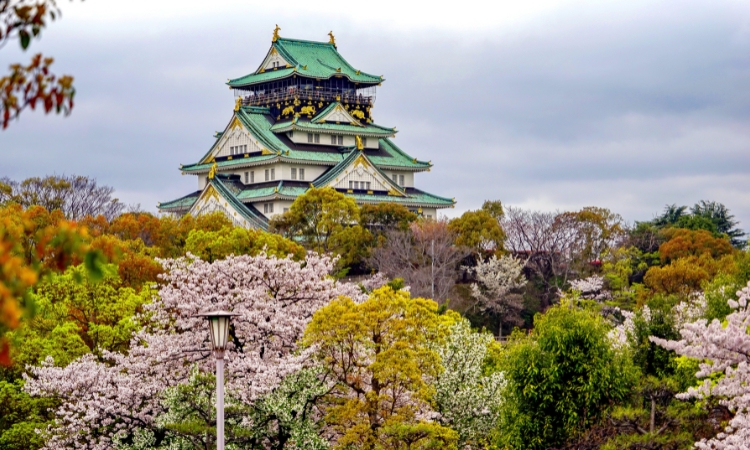
Cherry blossom season (sakura) is Japan at its most iconic. From late March through mid-April, parks, riverbanks, and castle grounds erupt in soft pink and white, and visiting Japan during the Cherry Blossom festival is one of the Best Things to do in Japan. It’s a genuinely magical sight — and the most popular travel period in the Japanese calendar.
That popularity comes with trade-offs: accommodation books out months in advance, prices spike, and popular spots like Maruyama Park in Kyoto can feel uncomfortably crowded. If cherry blossoms are a priority, book early (4–6 months ahead) and consider travelling slightly before or after peak bloom for a better balance of beauty and breathing room. Cherry blossom Japan tours through Indus Travel are timed precisely around peak bloom.
Autumn (October–November): Fall Foliage
Autumn is arguably the best-kept secret of Japanese travel. Temple gardens flame into reds, oranges, and golds; the weather is cool and crisp; and while crowds are present, they’re more manageable than spring. November in Kyoto is especially beautiful. Many seasoned travellers prefer autumn to spring for first trips.
Summer (June–August): Heat, Humidity, and Festivals
Summer in Japan is hot, sticky, and punctuated by spectacular festivals — the Gion Matsuri in Kyoto (July), Obon celebrations, and dramatic fireworks displays. It’s a vibrant time to visit, but the combination of school holidays and intense heat makes it the most demanding season for first-timers. Budget travellers will find better deals than in peak spring.
Winter (December–February): Quiet, Cold, and Ryokan-Perfect
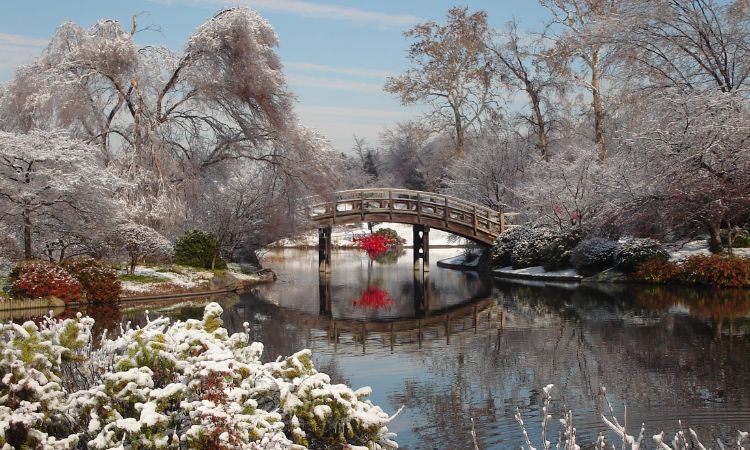
Winter brings snow to the Japanese Alps and the north, near-empty temples in Kyoto, and the deeply cosy pleasure of slipping into an outdoor hot spring (onsen) with snowflakes falling around you. Costs are generally lower, and popular sights are at their least crowded. It’s underrated for first trips if you don’t mind cold weather.
Season at a Glance
Season
Weather
Crowd Level
Relative Cost
Spring (Mar–May)
Mild, 10–18°C
Very High
High
Summer (Jun–Aug)
Hot & humid, 28–35°C
High
Moderate
Autumn (Oct–Nov)
Cool, 12–22°C
Moderate–High
Moderate–High
Winter (Dec–Feb)
Cold, 2–10°C
Low
Low–Moderate
Key festivals and holidays to plan around: Golden Week (late April–early May) is Japan’s busiest domestic travel period — accommodation prices surge and transport fills up. Avoid it unless you’ve booked months in advance.
How Much Does a Trip to Japan Cost? A Real Budget Breakdown
“How much does a trip to Japan cost?” is the most common question first-timers ask — and the answer depends heavily on your travel style. Here’s an honest, category-by-category breakdown.
Flights
Return flights from the US typically range from USD $700–$1,400 in economy, depending on your departure city and season. From major hubs like Los Angeles or New York, expect fares toward the lower end. Spring and Golden Week push fares higher. Booking 3–5 months out generally yields the best prices. Indus Travel’s guided packages include international flights, removing this variable from your planning entirely.
Accommodation
Japan offers an exceptional range of places to stay:
Budget hostels and guesthouses: USD $25–$50/night
Business hotels (clean, efficient): USD $70–$120/night
Mid-range city hotels: USD $120–$200/night
Traditional ryokan (with dinner and breakfast): USD $150–$350/person/night
A ryokan stay — sleeping on futons, wearing a yukata, eating multi-course kaiseki dinner — is one of Japan’s unmissable experiences. Budget at least one or two nights if you can.
Food
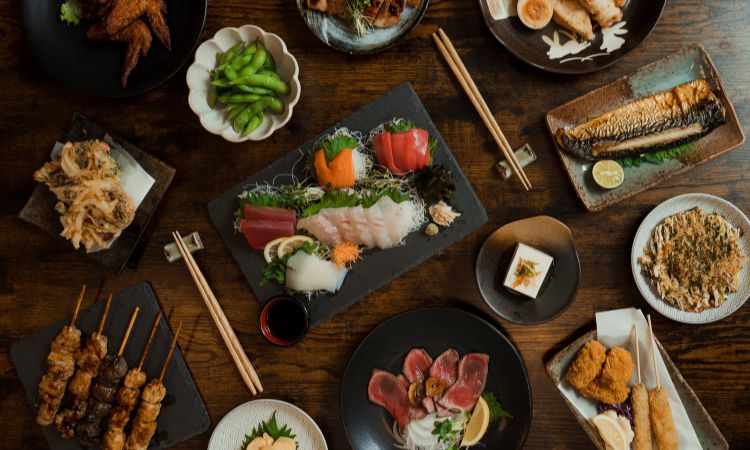
Japan is a paradise for any budget. A convenience store (7-Eleven, FamilyMart, Lawson) provides a genuinely satisfying meal for $5–$8. A bowl of ramen or a conveyor-belt sushi lunch runs $10–$15. A sit-down dinner at a mid-range restaurant is $20–$40 per person. A traditional kaiseki multi-course dinner starts at $80 and climbs from there.
Realistically, most travellers spend $40–$80/day on food, depending on how many convenience store meals they mix with restaurant dining.
Transport
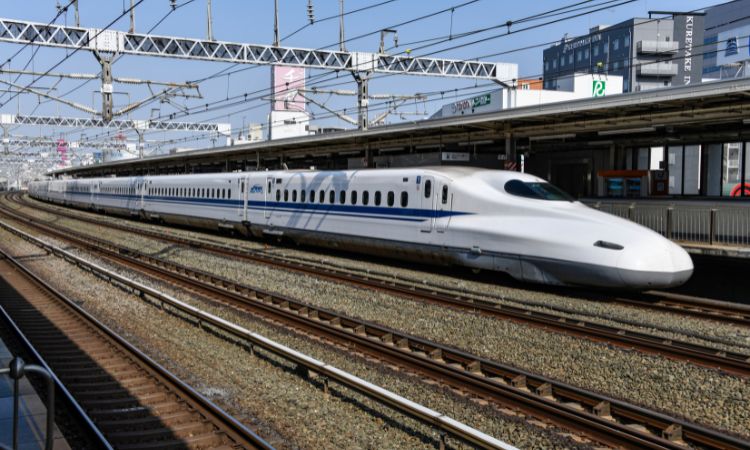
The JR Pass is Japan’s famous unlimited rail pass for tourists, covering the Shinkansen (bullet train) between cities. A 14-day JR Pass costs approximately USD $510 and is generally worth it if you’re visiting three or more cities. See the FAQ section below for more detail.
Within cities, a rechargeable IC card (Suica or Pasmo) handles subway and bus fares seamlessly — top it up at any station and tap in and out. Budget roughly $15–$30 for local transit per city.
Activities and Entrance Fees
Most temples and shrines charge modest entrance fees of $3–$7. Major attractions like teamLab digital art installations or the Ghibli Museum cost $15–$25. A day trip to Hakone (including a ropeway and ryokan onsen) can run $60–$100. Budget approximately $20–$40/day for activities.
Total Trip Cost Summary
Travel Style
Daily Budget
14-Day Trip (excl. flights)
Budget
$80–$100/day
$1,120–$1,400
Mid-Range
$150–$200/day
$2,100–$2,800
Comfortable/Premium
$300–$450/day
$4,200–$6,300
If you are wondering how much to budget for Japan in 2026? Add $800–$1,400 for return flights from the US and $510 for a 14-day JR Pass to get your total Japan trip cost.
Prefer to skip the planning?
See our all-inclusive Japan tour packages → — one price, zero logistics stress.
Japan’s Must-See Destinations for First-Time Visitors
A classic first-time Japan tour itinerary for 10 days connects the country’s three anchor cities — Tokyo, Kyoto, and Osaka — with well-chosen day trips. Here’s what each offers.
Tokyo
Japan’s capital is a world unto itself. Start in Shinjuku for the neon-soaked energy of izakayas and department stores that stretch underground for city blocks. Walk to Harajuku and Omotesando for fashion and architecture. Find quiet in Yanaka, one of Tokyo’s few pre-war neighbourhoods, with its old temples and low-rise shotengai shopping streets.
Day trips from Tokyo: Nikko (ornate Edo-period shrines in cedar forest, 2 hours north) and Kamakura (Great Buddha and seaside temples, 1 hour south) are both excellent single-day excursions.
Kyoto
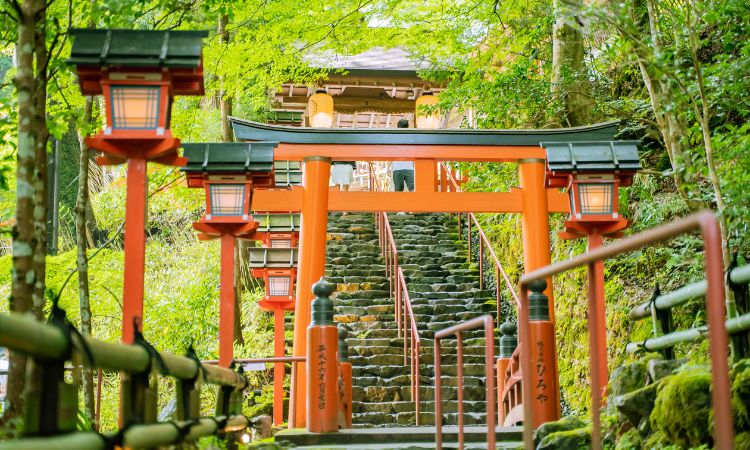
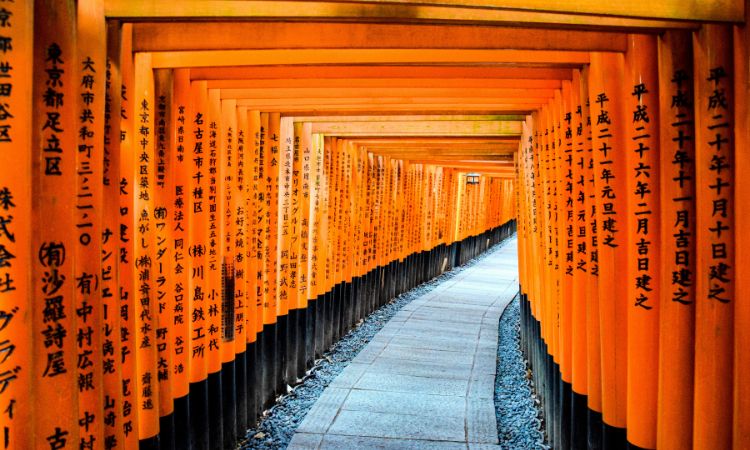
If Tokyo is Japan’s present, Kyoto is its soul. The former imperial capital holds over 1,600 temples and 400 shrines. Priorities for first-timers: the Fushimi Inari torii gate trail (best at dawn or dusk), the Arashiyama bamboo grove, the Gion district for geisha culture and machiya townhouses, and the Philosopher’s Path for a meditative canal-side walk through temple gardens.
A day trip to Nara (free-roaming deer and the giant bronze Buddha of Todai-ji) slots perfectly into a Kyoto-based day.
Osaka
Osaka earns its reputation as Japan’s food capital. The Dotonbori canal district is a sensory explosion of neon signage, street food stalls, and the kind of cheerful chaos that Kyoto deliberately avoids. Eat takoyaki (octopus balls), okonomiyaki (savoury pancakes), and as much fresh sushi as you can manage. Osaka Castle provides history; the nearby Kuromon Ichiba market provides breakfast.
Beyond the Classics
With two or more weeks, consider adding Hiroshima and Miyajima Island (the floating torii gate of Itsukushima Shrine is one of Japan’s most photographed sights) or Hakone for Mt. Fuji views and onsen soaking. A guided itinerary connects these dots efficiently, eliminating the hours of scheduling that independent travellers spend puzzling over train connections.
Practical Japan Travel Tips Every First-Timer Should Know
This section is where the difference between a frustrating trip and a seamless one gets made. These Japan travel tips for beginners come from years of escorting travellers through the country — keep this section bookmarked. You might also want to check out our Japan travel blog for deeper dives on specific topics, and our Japan Packing List post for what to bring.
Navigating Trains and IC Cards
Japan’s train network is vast, punctual, and (once you understand it) intuitive. Download Hyperdia or Google Maps for routing — Google Maps now does an excellent job with Japanese transit. Get a Suica or Pasmo IC card at the airport on arrival: it’s a rechargeable transit card that works on virtually every train, subway, and bus, and even at many convenience stores. Tap in, tap out. Never worry about buying individual tickets.
Cash vs. Card Culture
Japan remains more cash-dependent than most developed countries, though this is changing rapidly. Many restaurants, smaller shops, and rural businesses are cash-only. Always carry ¥10,000–¥20,000 in cash (roughly $70–$140). 7-Eleven ATMs reliably accept foreign cards — they’re your most dependable cash source outside major city bank branches.
Pocket Wi-Fi and SIM Options
Stay connected with a pocket Wi-Fi rental (collect at the airport, return in a postbox before departure, ~$5–$8/day) or a data SIM for your unlocked phone. Both are widely available for pre-order online. Reliable internet is essential for navigation, translation, and booking last-minute restaurants.
Etiquette Essentials
A few customs that genuinely matter:
Remove shoes when entering a home, traditional restaurant, or any space with tatami mats — look for a raised step and a row of shoes at the entrance.
No tipping — this is perhaps the most surprising Japan travel tip for Western visitors. Tipping is not just unnecessary in Japan; it can be considered rude or confusing. Great service is simply the standard.
Chopstick etiquette: Never stick chopsticks upright in a bowl of rice (a funeral ritual) and don’t pass food chopstick-to-chopstick (also funerary).
Quiet on public transport. Phone calls on trains are frowned upon; keep voices low.
Surprising fact: Tipping in Japan is considered impolite — excellent service is standard, not something that requires an additional payment.
Language Basics and Translation Apps
You do not need to speak Japanese to travel comfortably in Japan. Major city signage is bilingual. Google Translate’s camera mode handles menus and signs in real time. DeepL is excellent for written translation. Learning a handful of phrases (arigatou gozaimasu for thank you, sumimasen for excuse me) earns genuine goodwill.
Luggage Forwarding (Takkyubin) — A Tip That Transforms Your Trip
This is the insider Japan tip that genuinely delights first-timers: Takkyubin is Japan’s luggage forwarding service. For around ¥1,500–¥2,500 ($10–$17) per bag, courier services like Yamato Transport collect your luggage from your hotel in the morning and deliver it to your next hotel — sometimes the same day. Travelling by Shinkansen becomes effortless when you’re not dragging suitcases up station stairs. It’s one of the great pleasures of travelling in Japan, and most visitors don’t know it exists until someone tells them.
DIY vs. Guided Tour — Which Is Right for You?
Let’s be honest about this comparison, because both options have genuine merit. When weighing up Japan guided tours for first-time visitors against going it alone, the honest answer is: it depends on what kind of traveller you are
The Case for DIY Travel
Independent travel in Japan offers total flexibility: you go where you want, when you want, and spend as long as you like anywhere. You can change plans on the fly, stay in quirky hostels, and eat at places you discovered by wandering. For younger travellers, experienced international travellers, or those with specific interests (cycling the countryside, deep-diving into a single region), DIY Japan can be deeply rewarding.
The genuine cons: logistics take time and mental energy. Booking trains, coordinating accommodation across multiple cities, researching which Kyoto temple is worth the entrance fee versus which is overrated — this is enjoyable for some travellers and exhausting for others. Language barriers occasionally create friction. And without local knowledge, you often end up at the same spots as everyone else.
The Case for a Guided Tour
A well-designed small group tour to Japan removes the planning burden entirely and replaces it with local expertise. Your guide knows the temple that’s glorious at 7am before the crowds, the izakaya that doesn’t appear on any app, the train platform you’d never find on your own. Logistics — hotels, transfers, entry tickets — are handled. You arrive, you experience, you don’t stress.
The trade-offs are real: a fixed itinerary means less spontaneity, and a group pace means you’re sometimes moving when you’d rather linger.
Who Benefits Most from a Guided Tour?
First-time visitors who want to get Japan right without a trial run
Solo travellers over 40 who want company without the awkwardness of finding it themselves
Travellers with limited time (10–14 days) who want maximum coverage without logistics overhead
Those who want depth over logistics — understanding why Japan works the way it does, not just ticking off sights
If the paragraph above describes you, a guided tour is almost certainly the right choice for your first Japan trip.
How to Book a Guided Japan Tour with Indus Travel
Japan guided tours for first-time visitors vary enormously in quality, group size, and what’s actually included — here’s what to look for when choosing an operator.
What to Look for in a Japan Tour Operator
Not all guided tours are equal. When evaluating Japan guided tour packages, ask:
Group size: Smaller is better. Groups of 16 or fewer allow access to smaller restaurants, more nimble itineraries, and a more personal experience.
Guide expertise: Look for operators who use local Japanese guides — people who actually live in the country and know it from the inside.
What’s included: International flights, hotels, most meals, entrance fees, and all ground transport should be standard, not upgrades.
Departure guarantees: Some operators cancel tours if minimum numbers aren’t met. Check the policy before booking.
What Indus Travel Includes
Indus Travel’s Japan tours are built around small groups and genuine local expertise. A typical package includes international flights, hand-picked hotels (including at least one traditional ryokan), expert local guides, most meals, entrance fees to major attractions, and all airport transfers and ground transport. One price. No hidden logistics.
Choosing the Right Indus Japan Tour
Indus offers a range of Japan tour itineraries to match different interests and timeframes — from classic Japan tour itinerary 10 days routes connecting Tokyo, Kyoto, and Osaka, to cherry blossom-specific departures and longer itineraries that add Hiroshima, Hakone, and beyond. Browse the full selection on the Japan tours page to find your ideal departure.
When is the time to Book a trip to Japan?
Cherry blossom season (late March–April): Book 5–6 months in advance. These departures sell out fastest.
Autumn foliage (October–November): Book 4–5 months ahead.
Other seasons: 3 months is generally comfortable, though earlier is always better for preferred departure dates.
Indus Travel’s small-group Japan tours handle every detail — flights, hotels, expert guides, and hidden gems most visitors never find. All you bring is your curiosity.
1. Do I need a visa to travel to Japan? Citizens of most Western countries — including the US, UK, Canada, Australia, and most EU nations — receive a 90-day visa-free entry to Japan for tourism. No advance visa application is required; you’ll receive a stamp on arrival. Always verify requirements based on your specific passport nationality before travel.
2. Is Japan safe for solo travelers? Japan is consistently ranked among the world’s safest countries for travellers, including solo women. Violent crime rates are extremely low, locals are notably helpful, and the country’s infrastructure makes navigation straightforward. Solo travellers routinely report feeling more comfortable in Japan than in many Western cities.
3. What is the best duration for a first trip to Japan? 10–14 days is the ideal range for a first Japan trip. Ten days covers Tokyo, Kyoto, and Osaka comfortably with one or two day trips. Fourteen days allows the addition of Hiroshima, Miyajima, or Hakone without feeling rushed. Anything under 8 days tends to leave first-timers wishing they’d stayed longer.
4. Do I need to speak Japanese to travel in Japan? No. Major cities have bilingual signage, Google Translate handles menus and street signs via camera mode, and younger Japanese locals often speak functional English. Learning a few polite phrases earns genuine goodwill. If you’d prefer to eliminate any language friction entirely, a guided tour handles all communication with hotels, restaurants, and transport.
5. Is a JR Pass worth it for first-time visitors? Generally yes, if you’re visiting three or more cities. A 14-day JR Pass (approx. USD $510) covers unlimited travel on most Shinkansen and JR trains nationwide. If your itinerary includes Tokyo, Kyoto, Osaka, and Hiroshima, you’ll usually recoup the cost. Guided tours through Indus Travel include ground transport, so you don’t need to calculate this independently.
6. What is the best way to get around Japan? The Shinkansen (bullet train) connects cities efficiently and is a travel experience in itself. Within cities, subway networks are comprehensive and easy to use with a rechargeable IC card (Suica or Pasmo). Taxis exist but are expensive for most trips. In rural areas, local JR lines and buses fill the gaps.
7. When should I book a Japan tour to get the best availability? For cherry blossom season (late March–April) and autumn foliage (October–November), book 4–6 months in advance — these are the most popular departure windows and sell out quickly. For other seasons, 3 months ahead is generally sufficient, though earlier booking always gives you a wider choice of dates and accommodation.
8. What’s included in an Indus Travel Japan guided tour? Indus Travel Japan tours include international flights, hand-picked hotels (including traditional ryokan nights), expert local guides, most meals, entrance fees to major attractions, and all airport transfers and ground transport. Everything is handled — you arrive with your bag and your curiosity. See the full list of inclusions and available departure dates at indus.travel/japan-tours.
Ready to Make Japan Your Next Adventure?
Japan rewards everyone who visits — but it rewards first-timers who go in prepared (or guided) most of all. The country is safe, the food is extraordinary, the history runs deep, and the logistics, while they look complicated from the outside, are genuinely manageable once you’re on the ground.
If you’re ready to stop researching and start experiencing, Indus Travel’s small-group tours handle every detail from departure to return. No train schedules to juggle. No hotels to coordinate. Just Japan, in all its layered, surprising, deeply human richness.
 Toll Free (USA & Canada) +1 866 978 2997