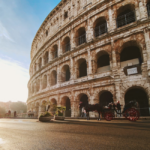
Rome, the eternal city immersed in its historical tapestry, stands as a living testament to the magnificence of the Roman Empire. The echoes of its illustrious past reverberate through the cobblestone streets and enduring architectural wonders. As we venture through ancient Roman ruins on Italy tours, our focal point is the vestiges of an era that indelibly shaped the trajectory of history—the Roman Empire. From the ancient rome Colosseum and Roman Forum to the Pantheon, Baths of Caracalla, and Trajan’s Market, these remnants offer a glimpse into the grandeur, innovation, and cultural richness of one of history’s most influential civilizations. Rome indeed is home to some of the oldest ruins in the world.
During its zenith, the Roman Empire stretched across vast territories, leaving an indelible imprint on cultures, governance, and architecture throughout Europe, Asia, and Africa. From its mythical inception in 753 BC to its peak around 117 AD, ancient Rome played a central role in shaping the ancient world. The remnants of this formidable empire, encapsulated in the form of the best Roman ruins, act as portals to a bygone era.
Exploring ruins in Rome is akin to unlocking a time capsule, affording us a peek into the daily lives, cultural opulence, and architectural mastery of ancient Rome. Scattered throughout the city, these remnants house tales of triumphs, defeats, and the mundane routines of a civilization that etched an enduring mark on human history. Iconic sites like the Colosseum, the Roman Forum, and other preserved structures stand as testaments to Rome’s architectural ingenuity and historical grandeur.
The Grandeur of the Roman Forum
History & Significance
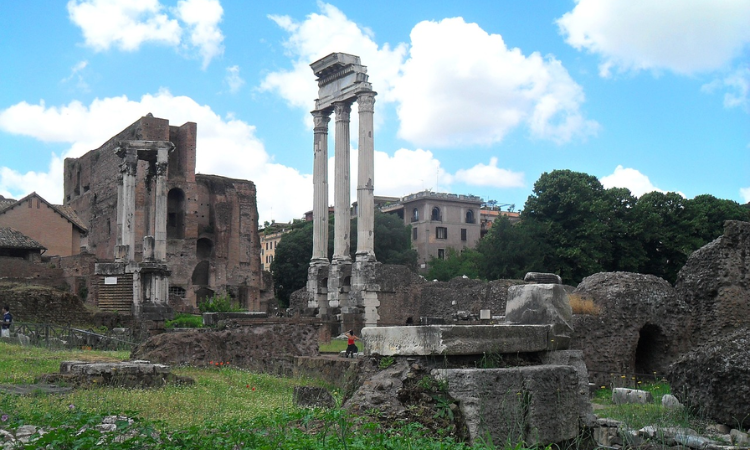
The Roman Forum, one of Italy’s most iconic landmarks and a UNESCO World Heritage Site, was the heart of ancient Rome. Originally a marketplace in the 7th century BC, it evolved into the city’s political, legal, and social hub, hosting military triumphs, gladiatorial spectacles, public trials, and historic speeches. It housed the Senate and significant religious and governmental buildings, making it the epicenter of Roman public life for centuries.
What to See
Visitors can explore ruins of grand structures like the Temple of Saturn, Basilica of Maxentius, and Curia Julia—all remnants of Rome’s political and spiritual life. While some buildings remain partially intact, others exist as fragments, evoking the grandeur of the ancient world.
Hours
- Open daily: 8:30 AM – 7:00 PM (last entry at 6:15 PM)
- Closed on January 1st and December 25th
Address
Piazza Santa Maria Nova, 53, 00186 Roma RM, Italy
Tips for Visitors
- Wear comfortable shoes as the terrain is uneven.
- Your ticket also includes Colosseum and Palatine Hill access—buy in advance to skip the long lines.
- Best visited with a guided tour to fully understand the ruins.
Palatine Hill – Witness to Rome’s Legendary Beginnings
History & Significance
Palatine Hill is the legendary birthplace of Rome, believed to be where Romulus founded the city in 753 BC. Archaeological evidence suggests human habitation as early as the 10th century BC, making it one of the oldest parts of Rome. Over time, it became the preferred residence for emperors, including Augustus, Tiberius, and Domitian, whose grand palaces still partially stand. Today, it remains one of the most significant Roman ruins in Rome, offering visitors a glimpse into the opulence of imperial life and the deep historical roots of the ancient city.
What to See
The site features ruins of Domus Augustana, House of Livia, and Stadium of Domitian. It also offers one of the best panoramic views of the Roman Forum and Circus Maximus.
Hours
- Open daily: 8:30 AM – 7:00 PM
- Last entry: 1 hour before closing
Address
Via di San Gregorio, 30, 00186 Roma RM, Italy
Tips for Visitors
- Bring water, as shade is limited.
- Best visited early in the morning or late in the afternoon for fewer crowds.
- The hill is steep; wear good walking shoes.
The Might of the Ancient Roman Colosseum
History & Significance
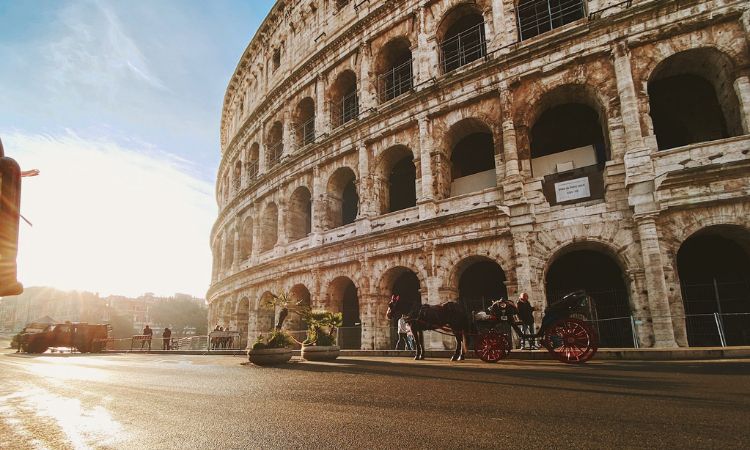
Built between 70-80 AD under Emperor Vespasian and completed under Emperor Titus, the Colosseum was the grandest amphitheater of the Roman Empire. Holding over 50,000 spectators, it was used for gladiatorial fights, battle reenactments, and public executions. Despite damage from earthquakes and looting, it remains one of the most recognized symbols of Rome.
What to See
- Arena Floor: Where gladiators fought.
- Hypogeum: The underground tunnels where animals and gladiators were held.
- Upper Levels: Offering panoramic views of Rome.
Hours
- Open daily: 8:30 AM – 7:00 PM
- Closed: January 1st and December 25th
Address
Piazza del Colosseo, 1, 00184 Roma RM, Italy
Tips for Visitors
- Combine with a Roman Forum and Palatine Hill tour for the best experience.
- Book tickets online to avoid long queues.
- Visit early morning or late afternoon for fewer crowds.
Ostia Antica – A Peek into Ancient Roman Life
History & Significance
Once Rome’s bustling seaport, Ostia Antica was a crucial center for trade and commerce. Over time, the port city was abandoned and buried under sediment, preserving its well-structured streets, public baths, theaters, and mosaics turning into Roman ruins. It’s one of the best-preserved Roman towns, offering an authentic glimpse into everyday life in Ancient Rome.
What to See
- Theater of Ostia Antica: An ancient amphitheater once hosting public performances.
- The Forum Baths: A communal bathhouse showcasing Roman engineering.
- Caseggiato del Thermopolium: A well-preserved Roman snack bar.
Hours
- Open daily: 8:30 AM – 7:00 PM
- Closed on Mondays
Address
Viale dei Romagnoli, 717, 00119 Roma RM, Italy
Tips for Visitors
- Bring snacks and water as there are few facilities inside.
- Take a train from Rome’s Porta San Paolo station (30-minute ride).
- Best visited with a guide to understand its historical significance.
Pantheon – The Best-Preserved Monument of Ancient Rome
History and Significance
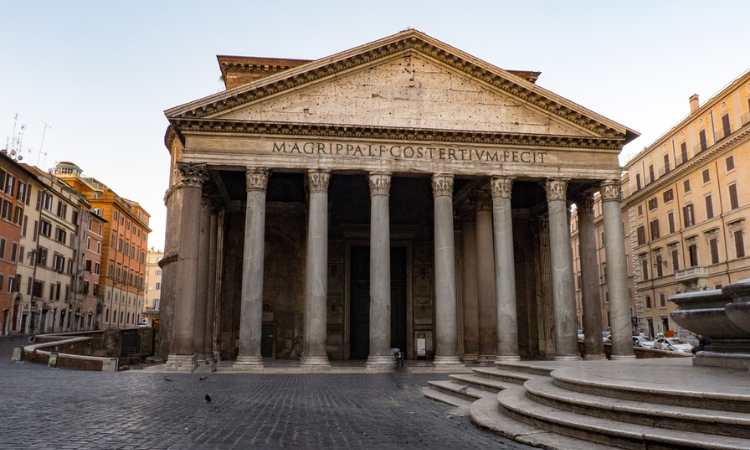
The Pantheon is one of the most remarkable architectural achievements of Ancient Rome, originally built as a temple to all gods. The present structure, completed by Emperor Hadrian around 126 AD, replaced an earlier version constructed by Marcus Agrippa in 27 BC, which was destroyed by fire.
The Pantheon is famous for its massive dome, which remains the largest unreinforced concrete dome in the world. The oculus (a central opening at the top of the dome) allows natural light to enter and serves as a connection between the heavens and the temple below. Over the centuries, the Pantheon was transformed into a Christian church in 609 AD, preserving it from destruction. Today, it is the final resting place of Italian kings Victor Emmanuel II and Umberto I, as well as the artist Raphael.
What to See at the Pantheon
- The Oculus – A 9-meter-wide opening at the center of the dome, symbolizing the connection between gods and mortals.
- The Dome – A masterpiece of Roman engineering, 43.3 meters in diameter, with a perfect hemisphere design.
- Tombs of Italian Royalty and Raphael – The resting place of some of Italy’s most important historical figures.
- Ancient Inscriptions – The facade still bears the Latin inscription:
“M.AGRIPPA.L.F.COS.TERTIVM.FECIT” (Marcus Agrippa, son of Lucius, consul for the third time, built this).
- Massive Corinthian Columns – Imported from Egypt, these 16 granite columns weigh 60 tons each.
Visiting Information
Address: Piazza della Rotonda, Rome, Italy
Hours:
- Monday – Saturday: 9 AM – 7 PM (last entry at 6:45 PM)
- Sunday: 9 AM – 6 PM (last entry at 5:45 PM)
- Closed on January 1st, August 15th, and December 25th.
Entry Fee:
- €5 (EU citizens 18-25)
- €3 (students)
- €0 (children under 18 and residents of Rome on the first Sunday of the month)
Tips for Visiting
Enjoy the Piazza della Rotonda – The lively square outside is perfect for a break.
Visit early in the morning to avoid crowds.
Look up at the oculus when it rains – The floor is slightly sloped for drainage.
Photography tip – The golden hour (just before sunset) gives the best lighting inside.
Dress appropriately – Since it is a church, modest attire is required.
Appian Way – The Ancient Roman Highway
History and Significance
The Appian Way (Via Appia Antica) is one of the oldest and most significant roads of Ancient Rome, constructed in 312 BC by Appius Claudius Caecus. Initially built to facilitate military movements, it became a crucial trade and travel route, linking Rome to Brindisi in southeast Italy. Known as the “Queen of Roads” (Regina Viarum), the Appian Way played a pivotal role in expanding Rome’s influence.
The road witnessed several historical events, including Spartacus’ rebellion in 71 BC, where 6,000 slaves were crucified along its path as a warning to others. Even today, it remains a symbol of Roman engineering mastery.
What to See on the Appian Way
- Catacombs of St. Callixtus and St. Sebastian – Early Christian burial sites with intricate frescoes.
- Cecilia Metella Mausoleum – A grand tomb of a noble Roman woman, showcasing well-preserved medieval fortifications.
- Circus of Maxentius – One of the best-preserved Roman chariot racing arenas.
- Tomb of Romulus – Believed to be the burial place of Romulus, Rome’s legendary founder.
- Original basalt paving stones – Walk on the very stones where Roman legions once marched.
Visiting Information
Address: Via Appia Antica, Rome, Italy
Hours: Open 24/7 (specific sites along the road have individual timings)
Entry Fee: Walking the road is free; certain sites have entrance fees.
Tips for Visiting
- Best visited by bike – The road is long, and biking is the best way to see its key landmarks.
- Wear comfortable shoes – The uneven basalt stones can be tough on the feet.
- Visit early or late afternoon – Midday can be hot and crowded.
- Public transport – Bus 118 from central Rome stops at key sites.
Via Sacra – The Sacred Road of Rome
History and Significance
The Via Sacra (“Sacred Road”) was the main street of Ancient Rome, running through the Roman Forum and leading to the Colosseum. Used for triumphal processions, religious ceremonies, and daily Roman life, it was one of the most walked-upon roads in history.
The Via Sacra witnessed the victorious Roman generals parading with their armies, showcasing spoils of war and captives. It was also the heart of Rome’s political, religious, and social life, lined with temples, markets, and government buildings.
What to See on the Via Sacra
- Temple of Saturn – One of the oldest temples in Rome, dedicated to the god Saturn.
- Temple of Vesta – The sacred home of the Vestal Virgins, who kept the eternal flame burning.
- Arch of Titus – Commemorating the victory over Jerusalem in AD 70.
- Basilica Julia – The ruins of a vast public meeting hall built by Julius Caesar.
- Curia Julia – The Senate House, where Roman laws were debated and passed.
Visiting Information
Address: Via Sacra, Roman Forum, Rome, Italy
Hours: Open with the Roman Forum (9 AM – 6:30 PM, varies seasonally)
Entry Fee: Included in the Colosseum + Roman Forum + Palatine Hill ticket (€16 – €18)
Tips for Visiting
- Visit in the morning – The Roman Forum gets crowded by midday.
- Take a guided tour – Helps bring the history of the Forum to life.
- Bring water and sunscreen – There’s little shade along the Via Sacra.
- Photography tip – Sunset offers stunning golden-hour views of the ruins.
Arco di Constantino – The Last Great Roman Triumph
History and Significance
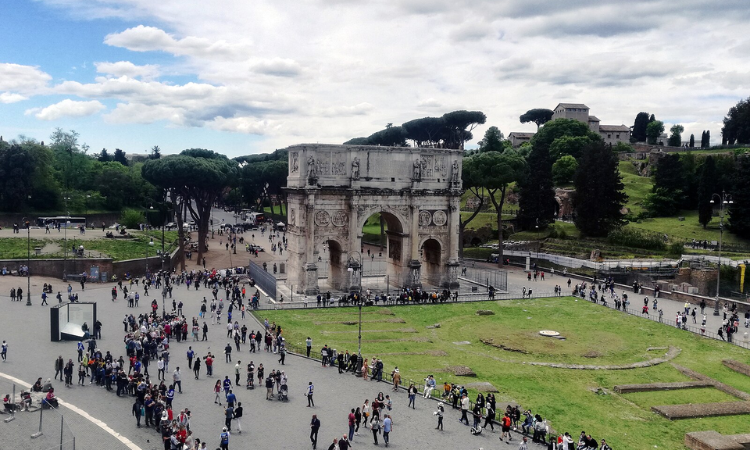
The Arch of Constantine is the largest triumphal arch in Rome, standing next to the Colosseum. Built in 312 AD to celebrate Emperor Constantine the Great’s victory over Maxentius at the Battle of the Milvian Bridge, it marks a turning point in history—Constantine’s embrace of Christianity.
The arch is 20 meters high, 25 meters wide, and adorned with sculptures taken from earlier monuments. It incorporates pieces from the reigns of Trajan, Hadrian, and Marcus Aurelius, making it a symbol of Rome’s golden age.
What to See on the Arch of Constantine
- Reliefs from different eras – The arch reuses sculptures from past emperors, blending Roman artistry across centuries.
- Battle scenes and victory imagery – Depicting Constantine’s triumph over Maxentius.
- Roman and Christian symbolism – A shift in power from pagan Rome to Christian Rome.
- Strategic location – Positioned between the Colosseum and Palatine Hill, marking a key spot in Roman celebrations.
Visiting Information
Address: Piazza del Colosseo, Rome, Italy
Hours: Open 24/7 (outdoor monument)
Entry Fee: Free
Tips for Visiting
- Go at night – The arch is beautifully lit up in the evening.
- Combine with a Colosseum visit – It’s right next to the entrance.
- Best photo spot – Stand at an angle to capture both the Colosseum and the Arch.
- Look for the mix of styles – The carvings reveal Roman artistic evolution.
Beyond the Main Attractions – Lesser-Known Roman Ruins
Introducing Other Significant but Lesser-Known Ruins:
While Rome’s iconic landmarks draw global attention, the city harbors a treasure trove of lesser-known Roman ancient ruins that unveil hidden chapters of its history. Journeying beyond the main attractions, we discover captivating sites that provide unique insights into ancient Roman life and culture.
The Baths of Caracalla:
The Baths of Caracalla, an expansive complex built in the 3rd century AD, stand as a testament to the Romans’ penchant for grandeur. These public baths, capable of accommodating thousands of visitors, reflect the opulence and social aspects of Roman bathing culture. Despite their lesser-known status, the Baths of Caracalla showcase remarkable architectural feats and the scale of communal life in ancient Rome.
Circus Maximus:
Circus Maximus, often overshadowed by the Colosseum, once served as Rome’s premier venue for chariot races and public spectacles. Spanning a vast expanse, this ancient stadium could host up to 150,000 spectators. Exploring Circus Maximus offers a glimpse into the thrill and excitement that defined public entertainment in ancient Rome, underscoring the multifaceted nature of the city’s leisure and recreational spaces.
Roman Catacombs:
Beneath the bustling streets of Rome lie the Roman Catacombs, intricate networks of underground burial chambers. Often overlooked, these subterranean passages reveal a fascinating aspect of Roman religious and burial practices. The catacombs, such as those along the Appian Way, served as resting places for Christians and offered a unique perspective on the city’s religious diversity and social dynamics.
Trajan’s Market – The World’s First Shopping Mall
Built in the early 2nd century AD under Emperor Trajan, Trajan’s Market is considered the world’s first multi-level shopping complex. This vast structure, made of brick and concrete, housed over 150 shops and offices, selling everything from food and spices to textiles and luxury goods. It also functioned as an administrative center, supporting Trajan’s Forum. Today, the well-preserved ruins offer a glimpse into ancient Roman commercial life, with its arched hallways, tabernae (shops), and a museum showcasing artifacts from Rome’s imperial past.
Planning Your Visit to Rome’s Ruins
Practical Tips for Visiting Rome’s Ruins:
Embarking on a journey through Rome’s historic ruins demands thoughtful planning to maximize the richness of your experience. Here’s an elaborate guide to ensure you navigate the ancient and modern intricacies of this timeless city with ease:
1. Optimal Timing for Tranquil Exploration:
- Plan your visits during early mornings or late afternoons to avoid the peak crowds. This strategic timing not only allows for a more peaceful exploration but also enhances the ambiance, providing a serene backdrop to absorb the historical significance of each site.
2. Guided Tours for In-Depth Understanding:
- Engage in guided tours led by knowledgeable experts. These tours offer a deeper understanding of the historical context and architectural marvels of Rome’s ruins. Guides provide valuable insights, anecdotes, and context that enhance your overall appreciation of the sites. Consider selecting specialized tours based on your interests, whether it’s archaeology, art, or ancient history.
3. Advance Booking and Skip-the-Line Options:
- For renowned sites like the Colosseum and Roman Forum, consider booking tickets in advance. This not only saves time but also ensures you have guaranteed access to these iconic landmarks. Explore skip-the-line options for a more seamless and efficient visit, allowing you to focus on the historical wonders rather than waiting in queues.
4. Comfortable Attire and Essentials:
- Given the extensive walking involved, wear comfortable footwear. Rome’s weather can vary, so dress in layers and carry essentials like sunscreen and water to stay comfortable throughout your explorations. A hat and sunglasses are also advisable for sun protection.
5. Respectful Behavior and Mindful Photography:
- Maintain a respectful demeanor at these historical sites. Avoid touching or leaning on ancient structures, and be mindful of the importance these ruins hold for both locals and global visitors. Practice responsible photography by adhering to designated areas and avoiding the use of flash, ensuring the preservation of these timeless treasures.
Suggested Itineraries for Experiencing the Ruins:
Crafting a well-rounded itinerary ensures a comprehensive and enriching exploration of Rome’s ruins. Here’s a detailed guide to capturing the essence of the city’s historical marvels:
1. Central Rome Discovery:
- Begin your journey in central Rome, exploring iconic sites like the Colosseum, Roman Forum, and Pantheon. This central hub offers a concentrated dose of ancient wonders, showcasing the heart of the city’s historical legacy.
2. Hidden Gems Expedition:
- Venture beyond the well-known sites to discover hidden gems such as the Baths of Caracalla and Circus Maximus. These lesser-explored locations provide a more intimate and authentic connection to ancient Roman life.
3. Underground Exploration:
- Dive into the subterranean marvels of the Roman Catacombs. Explore the labyrinthine passages and chambers that unveil the diverse religious history of ancient Rome, offering a unique perspective on burial practices and spiritual traditions.
4. Evening Strolls in Ancient Times:
- Experience the ruins during the enchanting evening hours. Select a few sites for an evening stroll, allowing you to witness the play of light on ancient structures and create a magical ambiance that echoes the splendor of ancient times.
By incorporating these detailed practical tips and suggested itineraries into your visit, you’re poised to uncover the layers of history that define Rome—a city where each ruin tells a tale of a bygone era. Enjoy your exploration of this timeless tapestry of antiquity!
Conclusion
- A Journey Through Time: Exploring Roman ruins is more than just visiting ancient remnants—it’s a deep dive into history carved in stone.
- Unveiling Rome’s Legacy: Walking through sites like the Colosseum, Roman Forum, and Pantheon reveals the grandeur and influence of ancient Rome.
- Lesser-Known Gems: Beyond the famous landmarks, places like the Baths of Caracalla and Circus Maximus offer unique insights into Roman life.
- Historical Significance: These ruins reflect the political, social, and religious landscape of a civilization that shaped human history.
- The Underground Mysteries: The Roman Catacombs add a spiritual layer, showcasing the diverse religious practices of the time.
- A Living Textbook: Roman ruins provide tangible lessons in governance, architecture, and the resilience of an empire that lasted centuries.
- A Deeper Connection: Walking these ancient paths offers a profound link to historical events, making history feel alive.
- Encouragement to Explore: Visiting these sites is not just a tourist activity but a chance to connect with our collective past.
- Immersive Experience: Every ruin, from the Colosseum to the Roman Forum, is an opportunity to step into the echoes of an empire that shaped the Western world.
In the heart of Rome’s ruins, the stones whisper tales of triumph, echo with the voices of emperors, and carry the weight of centuries. As visitors navigate this open-air museum, they become time travelers, bridging the gap between antiquity and the present. The ruins are not relics of a bygone era; they are gateways to understanding, a tangible testament to the enduring legacy of Rome. So, let the ancient stones speak, and may your exploration of Roman ruins be a journey that transcends time itself.
If you need any help in planning your trip to Italy or travel to Italy by rail, reach out to our experts and they will take care of it.
FAQ Section: Top Questions About Roman Ruins in Rome
What Are the Must-See Roman Ruins in Rome?
The must-see Roman ruins in Rome include the Colosseum, known for its grandeur and gladiatorial history; the Roman Forum, once the center of Roman public life; Palatine Hill, rich in myths and historical significance; the Pantheon with its remarkable architecture; and Ostia Antica, offering a glimpse into everyday life in ancient Rome. Each of these sites provides a unique insight into the Roman Empire and its legacy.
How Much Time Should I Allocate for Visiting Roman Ruins?
It’s recommended to allocate at least half a day to major sites like the Colosseum and Roman Forum. For a comprehensive exploration, including lesser-known ruins, you might need two to three days. Consider guided tours for in-depth understanding and efficient time management.
Are There Entry Fees for the Roman Ruins, and Can I Buy a Combined Ticket?
Many Roman ruins, like the Colosseum and Roman Forum, require entry tickets. You can purchase individual tickets for each site or a combined ticket for convenience and cost savings. Prices and availability can vary, so it’s advisable to check the official websites or contact local tourist information centers for current details.
What is the Best Time of Year to Visit Roman Ruins in Rome?
The best time to visit Roman ruins in Rome is during the spring (April to June) and autumn (September to October). These periods offer pleasant weather, fewer crowds, and more comfortable exploration of outdoor sites. Summers can be hot and crowded, while winters are quieter but with shorter visiting hours.
Are the impressive Roman Ruins Accessible for Visitors with Mobility Issues?
Accessibility varies across different ruins. The Colosseum has lifts and ramps for wheelchair access, but sites like the Roman Forum and Palatine Hill have uneven terrain that might be challenging. It’s advisable to check the official websites or contact the sites directly for detailed accessibility information and available facilities.
What are the oldest ruins in Rome?
Some of the oldest ruins in Rome date back to the 8th century BC, including the remnants of Palatine Hill, believed to be the legendary birthplace of Rome. The Cloaca Maxima, an ancient drainage system built in the 6th century BC, is also among the oldest surviving structures. Other early ruins include the Temple of Hercules Victor and the Servian Wall, which once protected the early city.
What is the name of a famous Roman ruin?
The Colosseum is the most famous Roman ruin, known worldwide as a symbol of Rome’s grandeur. Other iconic ruins include the Roman Forum, Pantheon, and Trajan’s Market, each offering a glimpse into different aspects of Roman civilization, from entertainment and politics to trade and religion.
What is the largest Roman ruin?
The Colosseum is the largest ancient Roman ruin, once capable of holding over 50,000 spectators. Another massive ruin is the Baths of Caracalla, an enormous public bath complex spanning 25 hectares (62 acres). Additionally, Hadrian’s Villa in Tivoli, a vast imperial retreat, is one of the largest surviving Roman complexes.
Which country is known for its ancient Roman ruins?
Italy is the country most famous for its ancient Roman ruins, with sites like Rome, Pompeii, and Ostia Antica preserving the legacy of the empire. However, Roman ruins can also be found in France, Spain, the UK, Turkey, Greece, and North Africa, as the empire extended across Europe, the Middle East, and North Africa.
Who ruled Rome after it fell?
After the fall of the Western Roman Empire in 476 AD, the city of Rome came under the rule of Germanic kings, starting with Odoacer, a barbarian chieftain. Later, the Ostrogoths and then the Byzantine Empire controlled Rome. By the 8th century, the Papal States, ruled by the Pope, emerged as the dominant power in the region.
What country is Roman today?
The modern country that corresponds to ancient Rome is Italy. Rome remains the capital of Italy and continues to be a center of historical and cultural significance. However, the legacy of the Roman Empire extends far beyond Italy, influencing many countries that were once part of its vast territory.
Why are Roman ruins buried so deep?
Over centuries, natural disasters, floods, and human activity gradually buried Roman ruins under layers of sediment and debris. The Tiber River frequently flooded, depositing silt that raised the ground level. Additionally, as new buildings were constructed on top of old ones, the remains of earlier structures became buried. Archaeologists often have to dig meters below the modern city to uncover ancient Roman ruins.
 Toll Free (USA & Canada) +1 866 978 2997