Dry Season vs Low Season: Which Is a Better Time to Travel to Thailand?
One Country, Two Perfect Seasons
If you are trying to decide the best time to travel to Thailand, you will quickly meet two key phrases in every guidebook: “dry season” and “low season”.
On paper, dry season promises clear skies and postcard‑perfect beaches, while low season offers cheaper prices, lush green landscapes and fewer people at famous temples and islands.
Both can be the best time to travel to Thailand depending on your budget, flexibility and travel style, so this complete comparison breaks down weather, crowds, costs and regional differences to help you choose the right season for your trip.
Understanding Thailand’s Seasons
Thailand sits firmly in the tropics and broadly has three main seasons: a cool/dry season from roughly November to February, a hot season in March and April, and a rainy or “green” season from around May or June to October.
However, the pattern shifts between regions, especially in the south where the Andaman Coast (Phuket, Krabi, Koh Lanta) and the Gulf of Thailand (Koh Samui, Koh Phangan, Koh Tao) follow different monsoon rhythms.
Because of this, the best time to travel to Thailand for beaches might not be the same months that are ideal for Bangkok, Chiang Mai or Isan in the northeast, and it is perfectly possible to find sunshine somewhere year‑round with smart route planning.
What Is the Dry Season in Thailand?
For most of the country, “dry season” refers to the cooler, less humid months from November through February, when rainfall drops, skies are clearer and daytime highs are more comfortable for city sightseeing and outdoor activities.
On the Andaman Coast, including Phuket, Krabi, Phi Phi and Koh Lanta, dry season typically runs from November to April, bringing calm seas, great visibility for diving and classic beach weather.
In the Gulf of Thailand, the pattern is offset: islands like Koh Samui and Koh Phangan often enjoy their driest, sunniest stretch from January to August, with heavier rain more likely in October and November.
Thanks to that combination of sun and low rain, dry season is also Thailand’s high season – the period when the country receives the highest number of international visitors and prices climb accordingly.
What Is the Low Season in Thailand?
“Low season” usually describes the core of the rainy or green season, roughly from June to September for much of Thailand, when hotel rates fall, bookings are easier and popular beaches and temples feel significantly quieter.
During these months, most regions see short, intense showers rather than constant all‑day rain, with many afternoons and mornings still offering blue skies – especially early in the season.
On the Andaman Coast, the monsoon starts earlier, around May, and can last until October, bringing rougher seas, occasional storm systems and, in some cases, temporary ferry cancellations or seasonal closures on smaller islands.
In contrast, the Gulf islands can be pleasantly dry in July and August, making low season the best time to travel to Thailand if you want quiet beaches on Koh Samui while Europe is in peak summer holiday mode.
Dry Season: Why Travelers Love It
When most people picture the best time to travel to Thailand, they subconsciously describe dry season: warm, sunny days, cooler evenings and a low chance of rain interrupting your island‑hopping, temple visits or street‑food tours.
From November to February, Bangkok, Chiang Mai and the northern mountains enjoy lower humidity, making long days of walking, market‑hopping and temple climbs far more comfortable than in the hot months.
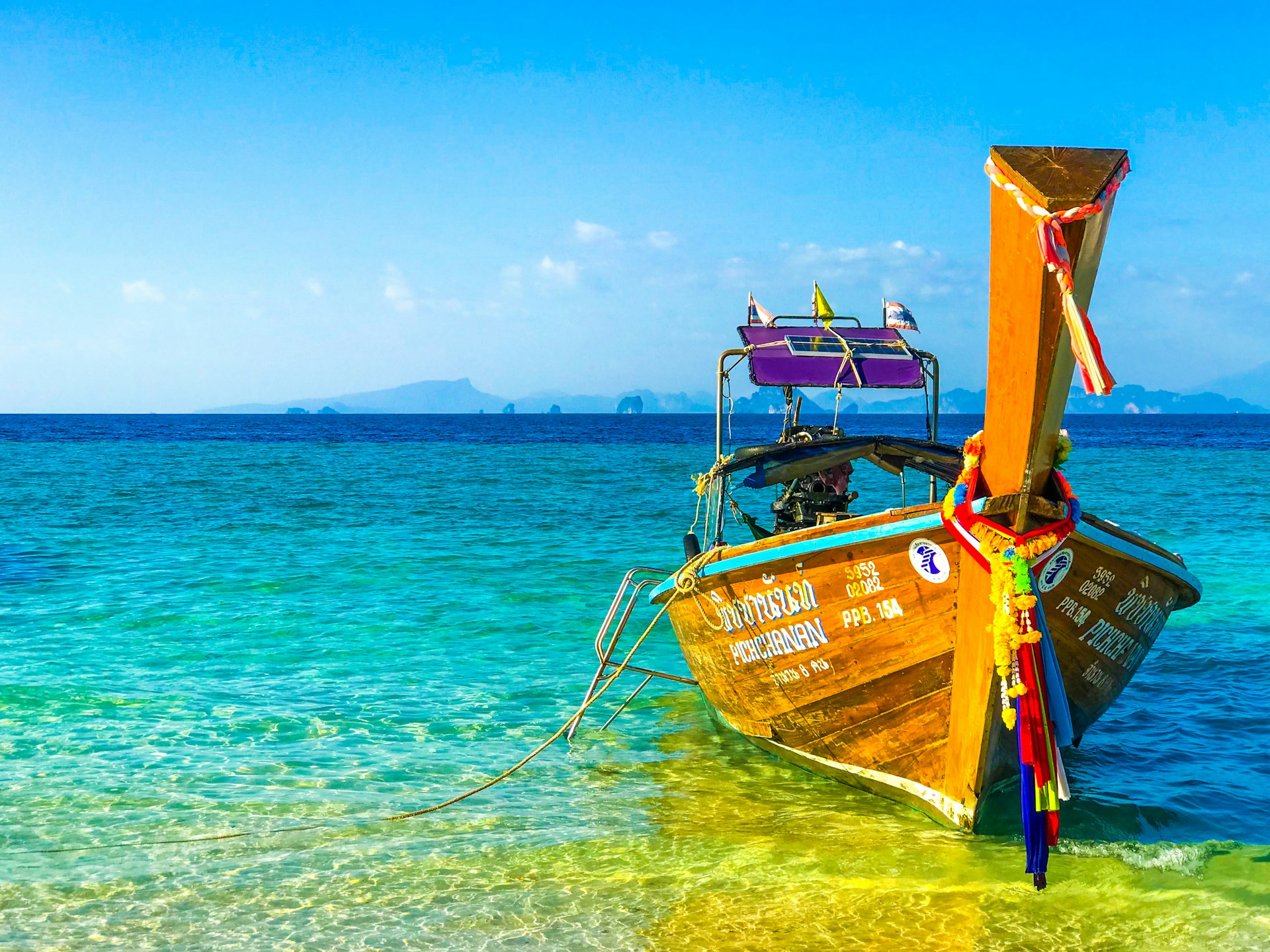
Down south, the Andaman Coast turns into the stereotypical Thai beach dream: glassy water, great visibility for snorkeling and diving, and virtually guaranteed sun on destinations like Phuket, Krabi and Koh Lanta.
Pros of Dry Season
Best overall weather across most regions – cool, dry and comfortable for sightseeing and outdoor activities.
Calmest seas and sunniest skies in the Andaman, ideal for island‑hopping, boat trips and diving.
Perfect conditions for trekking and cycling in northern Thailand, plus vibrant festivals like Loy Krathong and New Year in November–January.
Easier logistics, as fewer tours, ferries and excursions are cancelled due to storms or rough seas, making it the perfect time to sign up for a Thailand Group Trip with Indus Travels.
Cons of Dry Season
Highest prices for flights and accommodation, often 30–60% above low‑season rates in popular areas.
Largest crowds at major beaches, islands and temples, meaning busier boats, queues and less tranquil photos.
Prime months can sell out quickly, so the best time to travel to Thailand in dry season usually requires early booking for hotels and domestic flights.
Smoke and air‑quality issues can appear in parts of northern Thailand in late February and March, just after the coolest window.
Low Season: Why It’s Better Than You Think
Low season in Thailand has historically been underrated, but more travelers now recognize that this can be the best time to travel to Thailand if you value value for money, space and greenery over perfectly dry weather.
From June to September, hotel rates in Bangkok, Chiang Mai and many beach destinations can drop 40–60%, while even luxury resorts run aggressive promotions to keep occupancy healthy.
Landscapes turn lush and vibrant, rice paddies glow neon green and waterfalls are at their fullest, especially in northern Thailand and around national parks.
Pros of Low Season
Biggest savings on hotels, internal flights and some tours – perfect if you want to stretch your budget further.
Thinner crowds at icons like the Grand Palace, Ayutthaya, Railay or Phi Phi, and easier last‑minute bookings.
Richer colors and more dramatic landscapes in the countryside, plus fewer other tourists in your photos.
The Gulf of Thailand often has excellent beach weather in July–August even while the Andaman is wet, making low season a smart time for Koh Samui‑based itineraries.
Cons of Low Season
Higher humidity and a greater chance of daily downpours, especially late afternoon or evening.
More unpredictable conditions along the Andaman Coast, with rough seas that can affect ferry schedules or close some smaller islands temporarily.
Occasional localized flooding in cities like Bangkok during peak monsoon months such as August and September.
If your dates are rigid and you dislike rain, low season may feel too risky to be the best time to travel to Thailand for you personally. However, if you are flexible with dates, the Daily Departure Thailand Tours, is the way to go.
Dry Season vs Low Season by Region
Because seasonal patterns change across the country, the best time to travel to Thailand depends not only on your budget and rain tolerance but also on your chosen route.
Bangkok and Central Thailand
Bangkok is at its most pleasant from November to February: temperatures are lower, humidity is manageable and rain is limited, which suits first‑time visitors.
Low season (June–September) brings steamy days and frequent thunderstorms, but these often pass quickly, and the city’s strong indoor scene – malls, markets, cafés and rooftop bars – means weather rarely ruins an entire day.
Northern Thailand (Chiang Mai, Chiang Rai)
The cool, dry months from November to February are ideal for trekking, temple‑hopping and countryside stays, and many would call this window the clear best time to travel to Thailand for culture‑focused itineraries.
From June onwards, green season turns the hillsides vivid and waterfalls powerful, which appeals to photographers and nature lovers willing to accept some rain for fewer crowds.
Andaman Coast (Phuket, Krabi, Koh Lanta)
November to April form the classic dry season here, with calm blue seas, clear visibility and full ferry schedules between islands – perfect for short holidays and first‑timers.
May to October constitute the wetter low season, with higher chances of heavy rain, waves and storm systems; this can still work if you are flexible, but seasports may be limited on bad‑weather days.
Gulf of Thailand (Koh Samui, Koh Phangan, Koh Tao)
The Gulf enjoys drier conditions roughly from January through August, with its heaviest rains more likely around October and November – almost opposite to the Andaman.
For many travelers based in Europe or North America, this makes July–August low season globally but the best time to travel to Thailand if your focus is a Samui‑side beach holiday.
Who Should Choose Dry Season?
Dry season is usually the safer answer to “When is the best time to travel to Thailand?” for travelers who want things to run as smoothly as possible.
First‑time visitors: You’ll enjoy reliable weather, minimal disruption and textbook photos of temples and beaches.
Short holidays: If you only have 7–10 days, dry season reduces the risk that storms will affect half your trip.
Families with kids: Predictable sunshine and calmer seas are reassuring when traveling with children.
Dive trips in the Andaman: Visibility, sea conditions and boat schedules are best during the dry months.
Who Should Choose Low Season?
For others, low season can secretly be the best time to travel to Thailand, especially if you prize value, space and a slower pace over guaranteed sunshine.
Budget travelers and backpackers: Deep discounts on rooms and flights free up cash for experiences and longer stays.
Slow travelers and digital nomads: If you can ride out occasional storms, you get quieter cafés, emptier islands and more local interaction.
Photographers and nature lovers: Rice fields, jungles and waterfalls look their best in the green season.
Flexible couples or solo travelers: With an adaptable itinerary, you can chase the sun between coasts and enjoy the benefits of low season with fewer downsides.
Month‑by‑Month Snapshot for Planning
If you are still undecided about the best time to travel to Thailand, this high‑level overview can help narrow down your window.
November–February: Cool, dry and widely considered the top period nationwide; peak prices and crowds.
March–April: Hot season – dry but very hot, especially inland; great for beaches if you tolerate heat.
May–June: Transition into green season; more showers but good value and still plenty of sunshine.
July–September: Core rainy/low season for much of the country; wetter in the Andaman, often good in the Gulf; best deals of the year.
October: A mixed month – still wet early on but improving later; classic shoulder season with fewer crowds.
Practical Tips for Any Season
Regardless of whether you decide the dry season or low season is the best time to travel to Thailand for you, a few smart habits will make your trip smoother.
Book ahead in peak months: Reserve key hotels, internal flights and island ferries early for December–February.
Stay flexible in low season: Keep an extra buffer day around flights or important connections in case of weather disruptions, especially on the Andaman Coast.
Travel with layers: Pack light, breathable clothes plus a compact rain jacket and quick‑dry footwear for city puddles and muddy paths.
Plan by region: Check weather for your specific route rather than the whole country – when one coast is rainy, the other often has sunshine.
Get good travel insurance: Especially for low‑season trips that involve ferries, domestic flights or adventure activities.
Final Verdict: So, Which Season Wins?
There is no single “right” answer to the best time to travel to Thailand – only the right answer for you, your budget and your expectations.
If you want the most reliable weather, classic beach conditions on both coasts and minimal logistical hiccups, dry season from November to February is hard to beat, as long as you are comfortable with higher prices and busier hotspots.
If you are more price‑sensitive, enjoy slower travel, do not mind adjusting plans around the odd storm and are happy to chase the sun between Andaman and Gulf coasts, low season and the broader green season can easily become your personal best time to travel to Thailand.
Whichever you choose, Thailand rewards thoughtful planning: align your route with regional weather, build some flexibility into your schedule and you will discover that this country can be magical in every season – from glittering dry‑season sunsets over Phuket to moody green‑season skies above Chiang Mai’s rice fields.
 Toll Free (USA & Canada) +1 866 978 2997